Veterans Stand Together
Empowering Our Community
Learn how to support this organization
Mission
Our mission is to support Veterans in overcoming homelessness, PTSD, substance abuse, and unemployment by guiding them toward positive, sustainable outcomes. Through vocational training delivered through our own programs, community partners, and workforce opportunities, we empower Veterans to achieve stability, independence, and purpose. Using our proprietary Milestone system, we educate and connect Veterans to existing and prospective benefits while providing structured, wraparound support. By leveraging every available resource, we strengthen Veterans, their families, and the communities they serve.
Ruling year
2020
Founder/Executive Director
George Casillas
CAO/Board Member
Mark Treston
Main address
9836 Atlantic Ave
South Gate, CA 90280-5219 USA
EIN
47-5330369
Human services
Economic development
Women's services
Job creation and workforce development
Job counseling
Population served
Incarcerated people
Veterans
Military personnel
Homeless people
Low-income people
NTEE code
Military/Veterans' Organizations (W30)
IRS subsection
501(c)(3) Public Charity
IRS filing requirement
This organization is required to file an IRS Form 990 or 990-EZ.
Tax forms
Communication

Programs and results
What we aim to solve
Veterans face interconnected challenges including homelessness, unemployment, untreated PTSD, substance use, and limited access to earned benefits. These issues are often worsened by fragmented systems, lack of coordinated support, and barriers to workforce entry. We aim to close these gaps by providing structured, Veteran-centered case management, vocational training, workforce pathways, and benefits navigation. Through coordinated services and our proprietary Milestone system, we track progress, address barriers early, and support sustainable outcomes. By focusing on prevention, accountability, and long-term stability, we empower Veterans to achieve independence while strengthening families and communities.
Our programs
What are the organization's current programs, how do they measure success, and who do the programs serve?
Job Training
Empowering Veterans and their communities through cooperation, support, and advocacy by providing educational activities.
Case managment
Our Case Management program provides structured, Veteran-centered support designed to guide Veterans from initial engagement through long-term stability and self-sufficiency. Each Veteran is assigned a dedicated Case Manager who conducts comprehensive intakes, assesses immediate and long-term needs, and develops an individualized service plan aligned with the Veteran’s goals. Using our proprietary Milestone system, Case Managers track progress across housing stability, employment, education, benefits access, and wellness, ensuring accountability and measurable outcomes. Case Managers serve as advocates and navigators, connecting Veterans to internal programs, community partners, workforce opportunities, and eligible benefits while reducing barriers to access. Through consistent follow-ups, coordination of care, and trauma-informed support, our Case Management approach empowers Veterans to make informed decisions, build resilience, and achieve sustainable positive outcomes for themselve
VA Benefits Linkage Workshop
The VA Benefits Linkage Workshop is a free monthly workshop that helps Veterans and their families understand and access the benefits and services they’ve earned. Participants receive hands-on assistance with VA benefits, housing resources, employment opportunities, and supportive services, all in one place at no cost.
Professional Security Officer Training
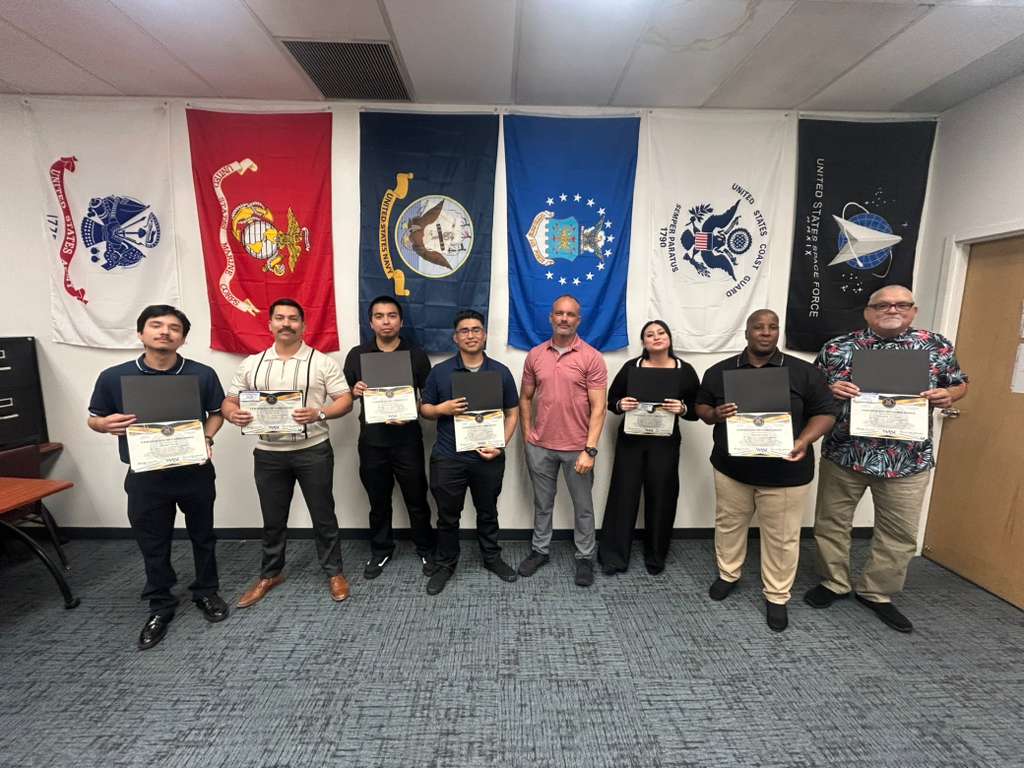
Professional Security Officer Training is a comprehensive workforce development program designed to prepare participants for immediate employment in the private security industry through industry-aligned instruction, hands-on training, and direct employer engagement. The program is led by experienced security professionals, instructors, and industry experts who provide real-world insight into the expectations, standards, and responsibilities of today’s security workforce. Participants receive training in key areas including powers to arrest, observation and incident reporting, patrol procedures, professionalism, communication skills, conflict resolution, de-escalation techniques, emergency response, workplace safety, and customer service. The program also incorporates employability training such as resume development, interview preparation, workplace readiness, and career coaching to support long-term success and retention. In addition to classroom instruction, participants have oppo
Where we work
-
California (United States)
Photos
Videos



Our results
How does this organization measure their results? It's a hard question but an important one.
Total # of Veteran graduates
This metric is no longer tracked.Totals By Year
Related Program
Job Training
Type of Metric
Other - describing something else
Context Notes
A total of 174 Veterans completed our 1-week WASC-accredited Security Officer training program. Of those, 125 Veterans were successfully assisted into job placement, representing a 71.8% placement rate. The remaining Veterans continue to receive individualized case management, job search assistance, and employment support to ensure continued progress toward sustainable workforce outcomes.
Veteran Families
This metric is no longer tracked.Totals By Year
Type of Metric
Other - describing something else
Context Notes
021: Veterans Stand Together served more than 800 individuals through workforce development, outreach, and supportive service programs focused on Veterans and military families. 2022: Veterans Stand Together expanded its community impact, serving over 1,000 individuals through employment assistance, resource navigation, and stabilization services. 2023: Veterans Stand Together significantly increased program reach, serving more than 2,580 individuals through workforce training, peer support, cas
Veteran Families resources
This metric is no longer tracked.Totals By Year
Type of Metric
Other - describing something else
Referral Cases handled
This metric is no longer tracked.Totals By Year
Type of Metric
Other - describing something else
Our Sustainable Development Goals


Learn more about Sustainable Development Goals.
Goals & Strategy
Learn about the organization's key goals, strategies, capabilities, and progress.
Charting impact
Four powerful questions that require reflection about what really matters - results.
What is the organization aiming to accomplish?
Veterans Stand Together (VST), represents a unique organization that offers a multifaceted approach to suicide prevention in primarily homeless Veterans, and extends help to anybody with
a Veteran status. The milestone system was created to meet the Veteran at their current state. Keying in on their
immediate needs. The goal of the system is to allow the Veteran to integrate and grow into the
milestone that is within reach. Using Federal, State, and county grants and/or funding, Veterans Stand Together (VST), would utilize the appropriate grant/funding source to empower the
Veteran to achieve their next milestone. The mission of our organization is to ensure that we assist the Veteran community with finding their passion in their civilian life to ensure a more
sustainable future for themselves and their families, while being provided full supportive services. We strongly believe that keeping the Veteran focused on their goals and aligning them
to micro-achievements, will stave off stressors and triggers that could leave the Veteran in a dire condition. Suicide Prevention is the reason Veterans Stand Together was created. Our apparatus
is purely built off community partnership, advocacy, and collaboration
What are the organization's key strategies for making this happen?
All VST personnel are required to become Certified Peer Support Specialists to maximize understanding and equip staff with our approach. We have noted that this specific language allows for more effective engagement within the Veteran community. The focus of our team is to be “of service” to the Veteran and to collaborate while providing short- and long-term solutions to this population. Ensuring that we bring in community partners at the right timeline of the Veteran’s Journey, allows for the Veteran to not feel overwhelmed or forced by outside pressures and unneeded stressors. Each Veteran is provided a different path to reach their next milestone based on their motivation. Our peer support team and outreach coordinators do not pressure the Veteran to accept services to speed along any process. We are constantly working with the Veteran to find their motivations, aptitudes and what drives them to complete their mission. We want to increase Veteran wellness and support self-advocacy through empowering achievements. The person that was able to succeed and thrive while they served our great country. We believe that if we can bring back that person internally, who once served, we can focus them on completing their life’s ambitions.
How we listen
Seeking feedback from people served makes programs more responsive and effective. Here’s how this organization is listening.
-
How is your organization using feedback from the people you serve?
To identify and remedy poor client service experiences, To identify bright spots and enhance positive service experiences, To make fundamental changes to our programs and/or operations, To inform the development of new programs/projects, To identify where we are less inclusive or equitable across demographic groups, To strengthen relationships with the people we serve,
-
Which of the following feedback practices does your organization routinely carry out?
We collect feedback from the people we serve at least annually, We take steps to get feedback from marginalized or under-represented people, We aim to collect feedback from as many people we serve as possible, We take steps to ensure people feel comfortable being honest with us, We look for patterns in feedback based on people’s interactions with us (e.g., site, frequency of service, etc.), We look for patterns in feedback based on demographics (e.g., race, age, gender, etc.), We engage the people who provide feedback in looking for ways we can improve in response, We act on the feedback we receive, We share the feedback we received with the people we serve, We tell the people who gave us feedback how we acted on their feedback, We ask the people who gave us feedback how well they think we responded,
-
What challenges does the organization face when collecting feedback?
It is difficult to find the ongoing funding to support feedback collection,
Financials
Financial documents
Download audited financialsRevenue vs. expenses: breakdown
Liquidity in 2024 info
0.25
Months of cash in 2024 info
0.2
Fringe rate in 2024 info
8%
Funding sources info
Assets & liabilities info
Financial data
Veterans Stand Together
Balance sheetFiscal Year: Jul 01 - Jun 30
The balance sheet gives a snapshot of the financial health of an organization at a particular point in time. An organization's total assets should generally exceed its total liabilities, or it cannot survive long, but the types of assets and liabilities must also be considered. For instance, an organization's current assets (cash, receivables, securities, etc.) should be sufficient to cover its current liabilities (payables, deferred revenue, current year loan, and note payments). Otherwise, the organization may face solvency problems. On the other hand, an organization whose cash and equivalents greatly exceed its current liabilities might not be putting its money to best use.
Operations
The people, governance practices, and partners that make the organization tick.
Documents
Founder/Executive Director
George Casillas
George Casillas a Marine Corps Veteran with over 15 years of Veteran Academic Training and job placement as an Instructor and Training Facilitator. Casillas, the co-founder of Veterans Stand Together, has designed various industry training for Veterans, including Security and Logistics Certificate programs. As a former Asset Protection Regional Director for a highly successful Fortune 500 retail company, Casillas understands the importance of delivering attainable outcomes while being fiscally responsible. Casillas has received the 2022 Los Angeles County Veteran of the Year Award from the County Board of Supervisors.
CAO/Board Member
Mark Treston

Number of employees
Source: IRS Form 990
Veterans Stand Together
Officers, directors, trustees, and key employeesSOURCE: IRS Form 990
Compensation data
There are no highest paid employees recorded for this organization.
Veterans Stand Together
Board of directorsas of 05/29/2026
Board of directors data
Mark Treston
Alice Kong Board Member
Claudia M Dzul Dir Operations
George Casillas CEO
Mark Treston CAO
Mark Treston CAO/Board Member
Maynor Dardon Board Member
Board leadership practices
GuideStar worked with BoardSource, the national leader in nonprofit board leadership and governance, to create this section.
-
Board orientation and education
Does the board conduct a formal orientation for new board members and require all board members to sign a written agreement regarding their roles, responsibilities, and expectations? yes -
CEO oversight
Has the board conducted a formal, written assessment of the chief executive within the past year ? yes -
Ethics and transparency
Have the board and senior staff reviewed the conflict-of-interest policy and completed and signed disclosure statements in the past year? yes -
Board composition
Does the board ensure an inclusive board member recruitment process that results in diversity of thought and leadership? yes -
Board performance
Has the board conducted a formal, written self-assessment of its performance within the past three years? yes
Organizational demographics
Who works and leads organizations that serve our diverse communities? Candid partnered with CHANGE Philanthropy on this demographic section.
Leadership
The organization's leader identifies as:
The organization's co-leader identifies as:
Race & ethnicity
Gender identity
Transgender Identity
Sexual orientation
Disability
GuideStar Pro Reports

Report successfully added to your cart!
Want more data?
A GuideStar Pro report containing the following information is available for this organization:
- *with the ability to download the data for
Download it now for $125.
Need the ability to download nonprofit data and more advanced search options?Consider a Pro Search subscription.